 Back to Resources
Zinc Whiskers and Cable Trays: Why This Matters for Data Centers
How zinc whiskers form on zinc-coated cable trays, how they reach sensitive electronics, and what that means for equipment reliability.
Zinc whiskers can grow from zinc-electroplated steel and cause intermittent or permanent short circuits in electronic equipment. Learn how the cable tray finish affects the risk, and why stainless steel removes it.
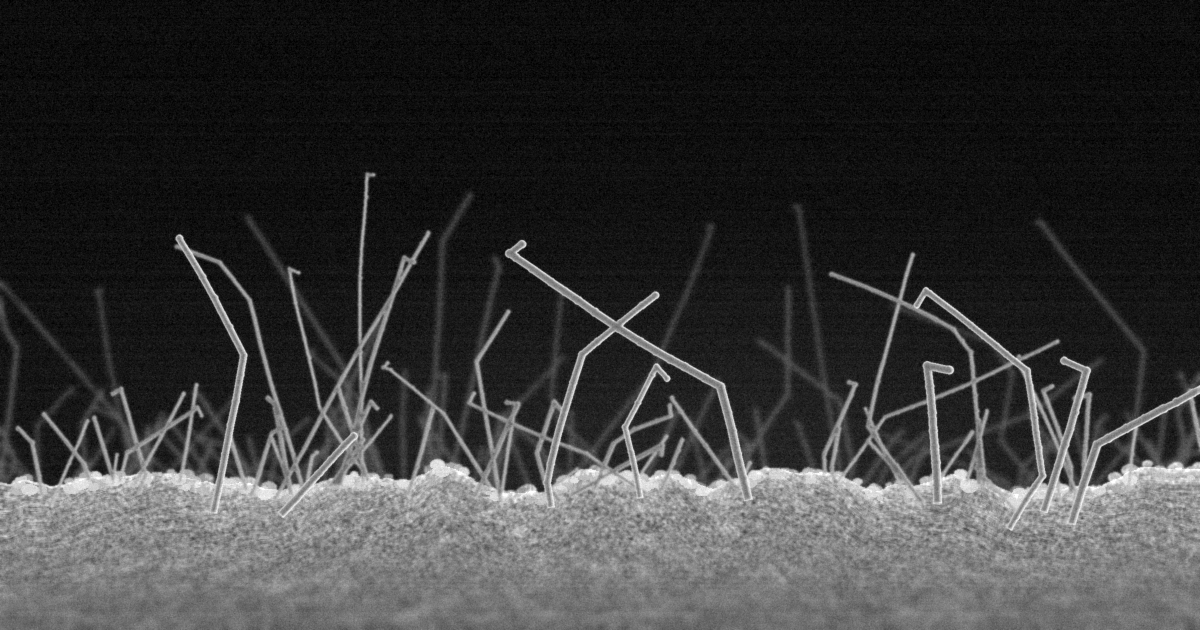
Zinc Whiskers · Technical Guide
Zinc-Free by Design: Cable Trays and the Zinc Whisker Problem
Zinc whiskers are conductive filaments that can grow from zinc-electroplated steel and cause intermittent or permanent short circuits in electronic equipment. In spaces with fine-pitch electronics, they are a recognized contamination risk, and the finish on the cable tray is one of the few variables an engineer can control at specification.
01 · The Failure Mode
How Zinc Whiskers Cause Faults
Zinc whiskers are crystalline filaments, typically a few microns in diameter and up to a few millimeters long. They are electrically conductive, and NASA Goddard reports they can carry tens of milliamperes before melting. A whisker that bridges two closely spaced conductors produces one of two outcomes, depending on the current available in the circuit:
- Above the whisker's fusing current: the whisker melts or vaporizes, producing an intermittent fault.
- Below it: the whisker remains in place as a permanent short.
Because a fusing whisker is destroyed by the fault it causes, post-failure analysis often finds no physical evidence, and the event may be logged as "no trouble found." Two indicators point toward whisker contamination: failures distributed across different vendors and equipment types without a pattern, and failure rates that rise after floor work, cable work or equipment moves.
Whiskers were first reported in the 1940s. Their relevance has increased because of three changes: conductor spacing on circuit boards has decreased, operating currents are lower and less likely to fuse a whisker, and many installations are now 10 to 30 years old, which gives any whisker growth time to reach a hazardous length.
02 · The Source
Whisker Formation on Cable Trays
Zinc is applied to steel for corrosion protection by hot-dip galvanizing or by electroplating. Electroplating deposits a thin layer using electric current and leaves that layer under compressive stress.
The growth mechanism has not been confirmed. The leading explanation is that the whiskers form to relieve the compressive stress in the plating. Observed behavior is consistent with that explanation but is variable:
- The incubation period before growth ranges from days to years.
- Reported growth rates are typically up to about 1 mm per year.
- Not all electroplated surfaces grow whiskers, and the tendency appears to depend on conditions during plating.
Wire basket cable trays are among the products commonly finished with electroplated zinc. Trays are installed adjacent to the equipment they serve, so any whisker that does grow and detach has a short path to the cooling air intakes. Mechanical disturbance, such as pulling cable or adjusting a tray, can release whiskers, and standard air filtration is not designed to capture particles of this size.
NASA Goddard has documented this on a cable tray. In a 2012 analysis, it confirmed zinc whiskers growing from a zinc-coated wire cable tray, with whiskers longer than 0.6 mm on a zinc layer about 6.5 microns thick.
03 · The Cost
Detection and Remediation
Whiskers are difficult to see with the naked eye. Under a bright light directed parallel to the surface, they can appear as a sparkling or dust-like texture, and confirmation requires a scanning electron microscope.
Once whiskers are confirmed, cleaning is an interim measure only. Cleaning can aerosolize whiskers, it cannot verify that every filament has been removed, and it does not stop regrowth from the electroplated source. Coatings applied over existing whiskers are also temporary, since whiskers can grow through them. Lasting remediation requires removing the zinc-electroplated components.
In an operating facility that work involves containment, replacement of hardware around live equipment, scheduled downtime and workload migration. NASA's records include a library data center with a roughly 20-year-old zinc-plated floor. It recorded ten server failures within two to three months at about $20,000 each, and about twelve router failures over eighteen months. Remediation required a floor reconstruction and equipment cleanout of about $100,000.
Specifying a zinc-free tray during construction avoids this work.
04 · The Solution
Stainless Steel Wire Mesh Cable Trays
Siltec US supplies stainless steel wire mesh cable trays. Stainless steel obtains its corrosion resistance from its alloy composition rather than from a surface coating, so the trays contain no zinc layer and no electroplating stress. The formation mechanism associated with electroplated zinc does not apply to the material. Siltec offers its trays in 304 and 316 stainless steel, and its splicing and mounting hardware is also stainless, so the zinc-free construction extends to the complete installed system.
Siltec's trays have these additional characteristics:
- Material: a single alloy throughout, with no finish to wear, chip or reapply.
- Hygiene: developed for food-industry cleanliness requirements, with easy access for cleaning. Siltec is an EHEDG member.
- Range: standard, locking, COMPACT, heavy-duty, cable-separation and single-cable trays.

Siltec is a leading global manufacturer specializing in hygienic, heavy-duty stainless steel wire mesh cable trays and routing systems.